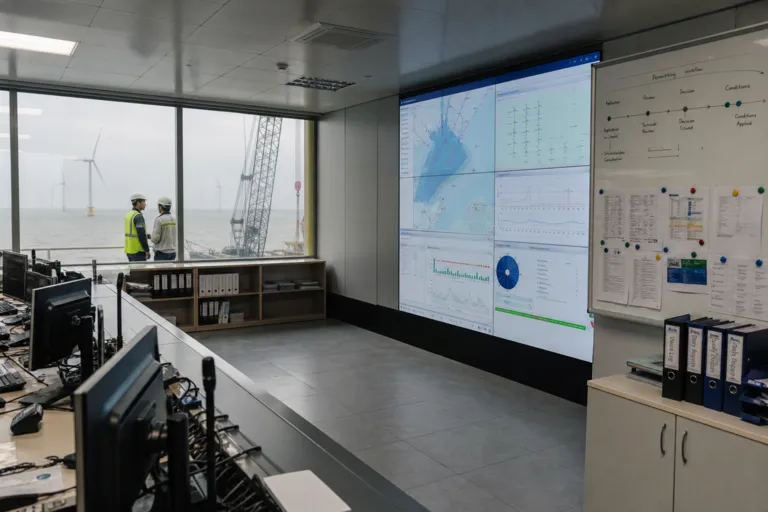
Vietnam is positioning offshore wind as a strategic pillar in its evolving power system, but execution depends on regulatory clarity. Under Power Development Plan VIII (PDP8), offshore wind targets range from 6 to 17 GW for 2030–2035, with longer-term ambitions reaching 113–139 GW by 2050. The World Bank Group has argued that hitting those goals requires large-scale capital investment and an enabling policy and regulatory environment that can attract private sector participation. In practice, multiple sources point to the same bottleneck: rules for how projects are awarded, permitted, and financed still need to become clearer, more transparent, and more predictable.
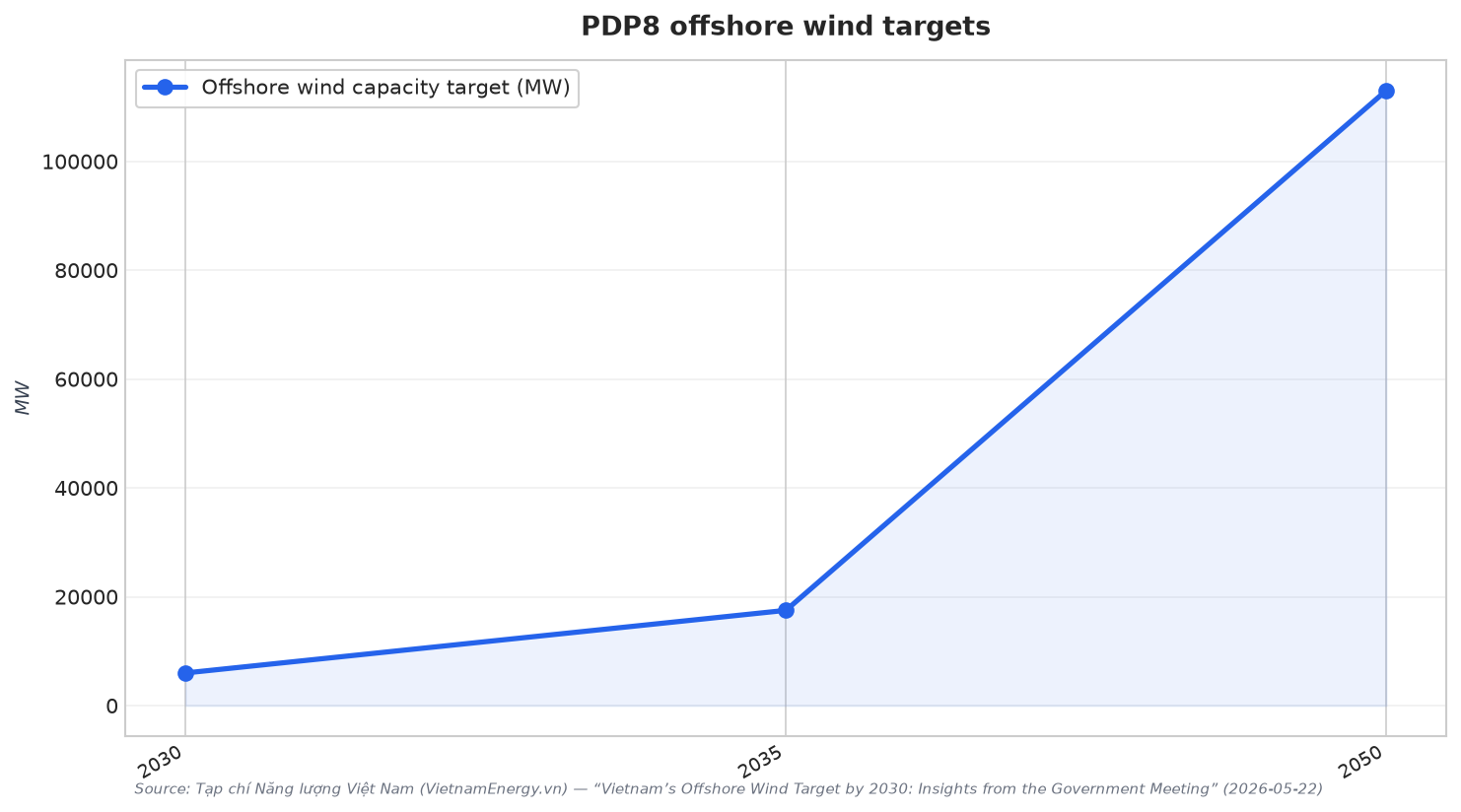
Several indicators show why urgency is rising. REGlobal, citing GWEC’s Global Offshore Wind Report 2024, notes Vietnam has not initiated any “true” offshore wind projects and has instead developed intertidal wind projects close to shore. GWEC also highlighted that an offshore wind project can take 6–8 years from greenfield to Commercial Operation Date (COD), a view adopted by the Ministry of Industry and Trade (MOIT). As a result, connecting first-generation projects by 2030 would require immediate policy and regulatory frameworks; MOIT estimates the first pilot offshore wind project may not be completed until 2032. This gap between targets and timelines is a central test for Vietnam’s market design.
Regulatory Clarity Is Becoming the Real Project Pipeline
Vietnam is taking steps to build a workable route to market, but investors still see friction points. REGlobal reports preparations to submit Marine Spatial Planning (MSP) to the National Assembly, scheduled for a meeting from 20 May to 28 June, and says MOIT submitted a draft proposal in April 2024 for a pilot mechanism. That draft includes a role for the State Energy Steering Committee (established in November 2023) to coordinate across agencies including MONRE, MOIT, CMSC, MPI, and others. Yet VnEconomy reports that policies for survey licensing, project site allocation, and approval procedures remain insufficiently clear and consistent, complicating the pathway from early exploration to construction.
Industry and policy voices are increasingly aligned on what “clarity” must cover. The World Bank’s framework for private sector-led offshore wind projects in Viet Nam aims to incorporate international best practices while minimizing changes to existing Vietnamese regulations, with a focus on a sustainable project award process that attracts international investment while building domestic capacity. From the investor side, VnEconomy quotes Vestas Vietnam’s Country Manager Antoine Croize emphasizing that stable and predictable policy is a prerequisite for long-term planning, and warns that ambitious targets can be missed when realism and predictability are lacking. REGlobal’s route-to-market priorities echo this, emphasizing simple remuneration for pilots, streamlined permitting, robust MSP and site allocation, an auction timeline, improved PPA bankability, and grid upgrades.
Recent government discussions suggest Vietnam is trying to close these gaps. PowerGen Advancement reports that officials from ministries including Industry and Trade, Finance, Construction, and Agriculture and Environment provided clarification on electricity pricing, marine area allocation, financing policies, and strategic plans to develop offshore wind as a key national industry. International energy companies signaled strong interest in investing, while stressing the need for stable and transparent regulation across the full project lifecycle, from surveys and feasibility studies to construction and operations. The same briefing notes the government is actively refining the legal and regulatory framework for 2026–2030, indicating that the near-term policy package will heavily influence whether Vietnam’s offshore wind targets translate into bankable, buildable projects.
What offshore wind capacity does Vietnam target under PDP8?
Why is regulatory clarity so important to Vietnam’s offshore wind buildout?
What timeline challenge affects first offshore wind projects in Vietnam?
What steps are being discussed to strengthen Vietnam Offshore Wind Policy?