Cambodia’s special economic zones are increasingly positioned as the country’s industrial backbone, combining investment incentives, simplified administration, and purpose-built infrastructure that can help manufacturers start operations faster than building standalone sites. Khmer Times describes the industrial real estate market as early but accelerating, citing infrastructure investment, SEZ expansion, and occupier demand as drivers. It also notes that SEZs have attracted billions of dollars in foreign direct investment over the past two decades, generated jobs believed to be close to 250,000 in 2026, and supported more than 1,000 investment projects. The same source highlights that these industrial hubs host global manufacturers across automotive, electronics, garment, footwear, and consumer goods, reinforcing Cambodia’s role in regional and global supply chains.
Recent zone-level operating figures underline the scale that is already in place. Emerhub states Cambodia has 39 operational SEZs, with more approved and under development. Citing the Council for the Development of Cambodia (CDC), Emerhub adds that the zones collectively host more than 250,000 employees across more than 560 factories, and that total investment capital and exports exceed USD 13.5 billion in the first quarter of 2026 alone. This activity is supported by a regulatory framework that is distinct from other businesses incorporated in Cambodia. Emerhub points to Sub-Decree No. 148, enacted on 29 December 2005, and says the Cambodian Special Economic Zone Board (CSEZB), operating under the CDC, oversees development and regulation.
Why SEZ Structures Fit Diversified Manufacturing
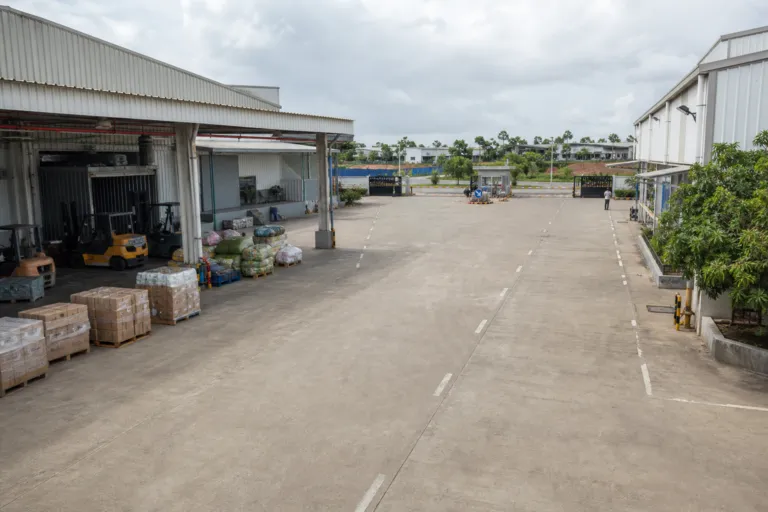
For manufacturers looking for predictable site delivery and trade facilitation, the SEZ design is built for speed and export processing. Khmer Times explains that modern zones can provide internal road networks, utilities, telecommunications, warehouses, and factory facilities, and that many also operate on-site customs offices and bonded warehouses. Emerhub adds detail on how each SEZ must include a Production Area, which can contain General Industrial Zones (GIZs) and/or Export Processing Zones (EPZs). In an EPZ, companies produce goods for export under streamlined customs procedures, and retail activity is prohibited. This structure matters to Cambodia Manufacturing SEZ Growth because it supports both domestic-serving production and export-first manufacturing within a standardized zone model.
The SEZ platform is also developing in a broader national shift toward a more varied industrial base. MarketHub describes Cambodia as an “Export Manufacturing & Emerging Industry Economy,” supported by clothing, footwear, and travel goods, while diversifying through electronic components, automobile assembly, tires, agri-food processing, and logistics. The Cambodian Development Board identifies agri-food, automotive, and electronics as key investment sectors, and MarketHub characterizes electronics as a rapidly growing sector targeting global customers. This direction aligns with Wikipedia’s description that Cambodia is striving to diversify and that there is evidence of expansion in value-added exports, including electrical goods and telecommunications by foreign multinationals. Together, these points frame SEZs as a practical landing zone for the next wave of manufacturing categories.
Ownership and governance choices may also shape how zones compete for new projects. Emerhub notes that Cambodia’s zones are almost entirely developed and managed by private operators rather than the government, arguing this introduces market discipline and helps avoid wasteful public-sector setup costs seen elsewhere. On-the-ground expectations for specific zones show how developers market this proposition across multiple sectors. IPS Cambodia Real Estate lists examples such as Bavet SEZ 2, expected to attract manufacturing, logistics, and agricultural investment, and Pochentong SEZ, expected to attract logistics, manufacturing, and tourism. IPS also says SEZs have more relaxed labour regulations compared with the rest of the country, and highlights infrastructure such as roads, ports, and airports that can support import, export, and business travel.
How many SEZs are operational in Cambodia, and how many factories do they host?
What employment scale is linked to Cambodia’s SEZ ecosystem?
What is the legal basis for Cambodia’s SEZ system?
How do SEZ features support export-oriented production?
What is driving Cambodia manufacturing SEZ growth toward more diversified industries?