Vietnam is moving deeper into digital payments, and QR rails are becoming a mainstream checkout habit. By the end of 2025, nearly 89% of people aged 15 and above had transaction accounts at banks or other permitted institutions, and the value of cashless payments was reported at more than 28 times gross domestic product. From 2021 to 2025, cashless payment transactions grew at average annual rates of 58.86% in number and 24.36% in value. In the first eight months of 2026, the State Bank of Vietnam (SBV) said cashless payment transactions rose 34.56% in volume and 13.26% in value year-on-year, extending the same direction of travel.
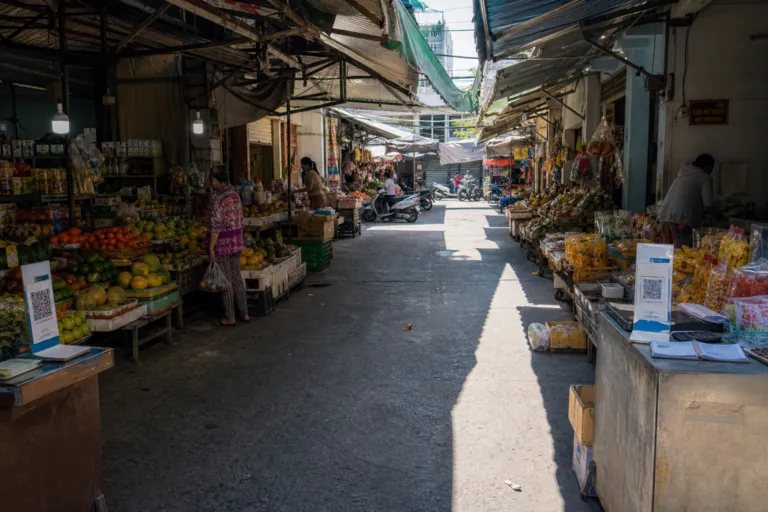
QR is central to this momentum because it scales through both bank apps and wallets, and it can reach small merchants quickly. In 2025, QR codes held 54.67% of Vietnam’s mobile payments market share, while point-of-sale transactions led by mode with a 67.89% revenue share. QR payments alone reached 311 million transactions worth VND 274.2 trillion (USD 10.6 billion), up 6.66% in volume and 25.85% in value, based on SBV-cited figures. Behind the scenes, policy targets also shape behavior. One policy goal is for 80% of e-commerce transactions to be non-cash by 2030, which supports ongoing QR acceptance and consumer migration away from cash.
From Connected Systems to Real Usage: Cross-Border QR Goes Practical
Cross-border QR in Vietnam is now being discussed less as a technical milestone and more as a tool for tourism, retail, and cross-border trade. At a September 25 workshop, SBV Deputy Governor Pham Tien Dung said infrastructure connectivity is only the starting point and that “economic connectivity” is the end goal. Vietnam has promoted bilateral retail payment cooperation through QR codes with Thailand, Laos, Cambodia, China, the Republic of Korea, and Singapore, while continuing to expand connectivity with other markets. This focus aligns with the wider Vietnam cashless economy shift, where acceptance points, service quality, convenience, and cost shape whether cross-border links become everyday payment behavior.
Early usage signals suggest the cross-border links are generating real transaction flows, especially in nearby markets. In the first eight months of 2026, transactions by visitors from Thailand, Laos, and Cambodia in Vietnam increased eightfold in volume and sixfold in value year-on-year. Over the same period, Vietnamese users making transactions in those three markets recorded fivefold growth in volume and fourfold growth in value. China is also emerging as a significant market for VietQRGlobal. NAPAS connected with UPI in December 2025, Alipay in April 2026, and Weixin Pay in August. By August, only four months after the expansion began, transactions by Chinese visitors using Chinese payment applications to scan VietQRGlobal in Vietnam had tripled in volume and quadrupled in value compared with April.
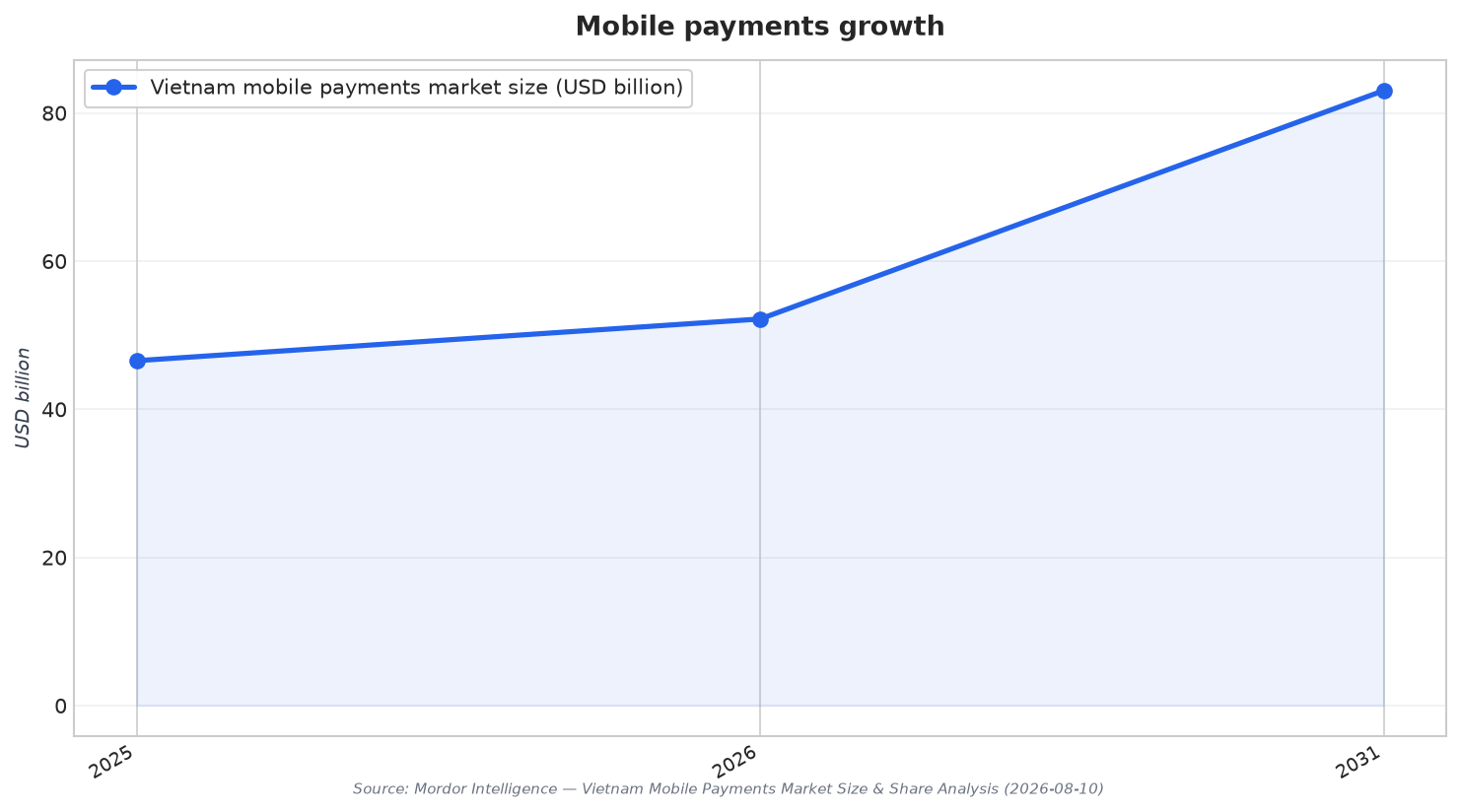
Domestic scale and digital infrastructure help explain why these cross-border corridors can grow quickly. Vietnam counted 127 million mobile connections in early 2025, exceeding the population due to dual-SIM usage, and smartphone penetration climbed to 84%. Expanded 4G coverage reached 99.8% of communes, supporting instant QR scans even in rural markets. Market forecasts also point to sustained expansion. Mordor Intelligence valued Vietnam’s mobile payments market at USD 46.56 billion in 2025 and estimated growth to USD 52.19 billion in 2026 and USD 83.02 billion by 2031, while Vietnam’s broader payment market was expected to grow from USD 120.78 billion in 2025 to USD 133.35 billion in 2026 and USD 218.8 billion by 2031. With SBV and NAPAS emphasizing “usable” connectivity, the next phase will hinge on how often travelers, merchants, and households choose QR for real purchases and services.
How fast are cashless payments growing in Vietnam?
What do the latest figures say about QR payment usage?
Which cross-border QR links are Vietnam building out?
What is driving the Vietnam cashless economy shift toward cross-border QR rails?
How quickly are cross-border QR payments increasing with nearby countries?