Southeast Asia’s sovereign AI push accelerated in 2026, as multiple ASEAN governments started treating domestic models, domestic infrastructure, and domestic data controls as national strategy rather than optional tech policy. Five ASEAN countries—Singapore, Vietnam, Indonesia, Malaysia, and Thailand—are explicitly working toward AI sovereignty, alongside regional efforts such as the ASEAN Responsible AI Roadmap and the Expanded ASEAN Guide on AI Governance. This sits inside a bigger Asia-Pacific shift: by March 2026, every major APAC economy had launched or funded a domestic large language model (LLM) programme, while the Bangkok Declaration—signed by over 100 countries in February 2026—formally committed signatories to pursuing AI sovereignty.
The economic stakes are not small, and the market logic for localized models is straightforward. Carnegie describes Southeast Asia as a region of nearly 700 million people, with ASEAN’s ten member states forming a combined market size of nearly $4 trillion. Yet much of frontier AI compute is concentrated elsewhere. A CNAS estimate cited in a sovereign AI market briefing says the United States and China control approximately 90% of the computing power required to develop and deploy frontier AI. That imbalance helps explain why ASEAN discussions now connect language, data, and cloud infrastructure into a single playbook for resilience and bargaining power.
Compute Sovereignty Meets Local-Language Reality
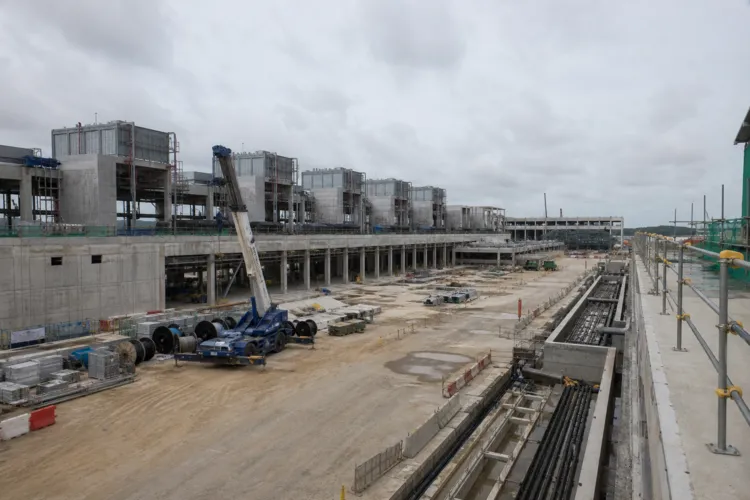
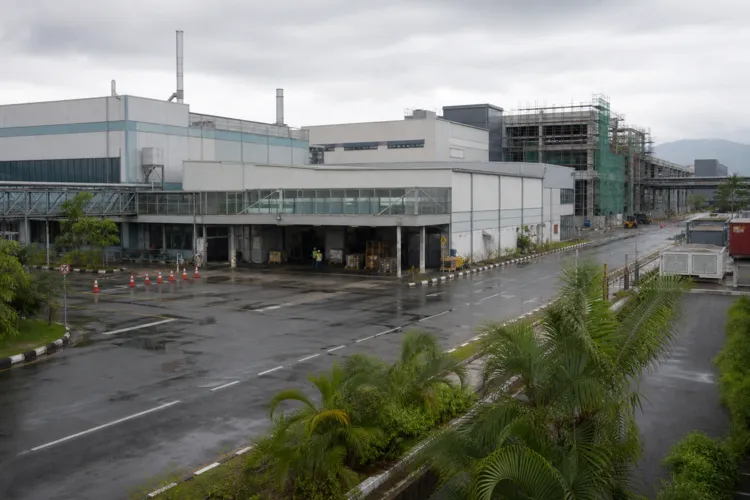
In practice, the emerging ASEAN Sovereign AI Strategy is less about one blueprint and more about national moves that share a common theme: control over where models run, and how local data is used. Thailand’s “Cloud First” policy drew more than THB 500 billion in investment pledges from global tech giants at the 2026 World Economic Forum, and reporting also describes that same THB 500 billion as being diverted toward domestic infrastructure. Malaysia’s National AI Office mandates that sensitive government data remains on local soil, while the Johor-Singapore-Batam digital triangle is described as one of the world’s fastest-growing data center hubs—an indicator that the region is pairing governance goals with physical build-out.
Language is the other driver that keeps resurfacing. Vietnam’s first independent AI Law, effective March 2026, establishes a “National AI Infrastructure” and prioritizes Vietnamese language data so AI can understand local context better than foreign models. Malaysia’s ILMU is positioned as a Bahasa Malaysia LLM built with a large national team acquiring data from domestically licensed, Malaysia-centric sources such as educational and government materials. FULCRUM reports ILMU is hosted in YTL’s 500MW Green Data Centre, developed in partnership with Nvidia, and that the process is designed so training data resides on sovereign AI data infrastructure within domestic borders.
Indonesia shows how sovereignty narratives and supply chains can collide. Asia Times reports Jakarta is building a sovereign-AI story around GPU Merdeka and the Sahabat-AI local-language models, while “Chinese capital, American chips and Indonesian sovereignty rhetoric” are flowing into the same projects. That tension matters because sovereignty does not necessarily mean building every layer domestically, even as governments try to reduce dependence. Across Southeast Asia, proponents also point to performance in local dialects as a proof point, including the example of SEA-LION, described as Singapore’s regional LLM, outperforming global giants in local dialects.
What is driving ASEAN governments to pursue sovereign AI?
Which ASEAN countries are highlighted as pursuing AI sovereignty in 2026?
How does Vietnam’s 2026 AI Law support local-language AI?
What does Malaysia’s ILMU example show about building domestic LLMs?
How is an ASEAN sovereign AI strategy taking shape across the region?