
Indonesia is entering the strictest phase of its halal policy as mandatory certification takes full effect in October 2026. Government Regulation No. 42 of 2024 underpins the shift, and updates from BPJPH officials describe it as a move from a largely voluntary era to a market-entry obligation. Sources differ slightly on the start date, citing October 17, 2026 and October 18, 2026, but both frame October 2026 as the turning point. What matters for supply chains is the direction: companies selling into Indonesia must prepare for repeatable compliance processes before products circulate.
The categories in scope set the immediate supply-chain priorities. A U.S. FAS GAIN report states that product categories which must be certified halal by October 17, 2026 are limited to food, beverages, medicines, and cosmetics. Other industry and advisory sources describe broader coverage, including pharmaceuticals, imported and exported goods, and consumer goods, and one update lists additional categories such as chemical and biological products as well as personal care and household items. Regardless of where the boundary ultimately settles for each product type, companies in food and cosmetics face the clearest compliance deadline and the most direct operational impact.
Why Full-Chain Compliance Is Becoming the New Default
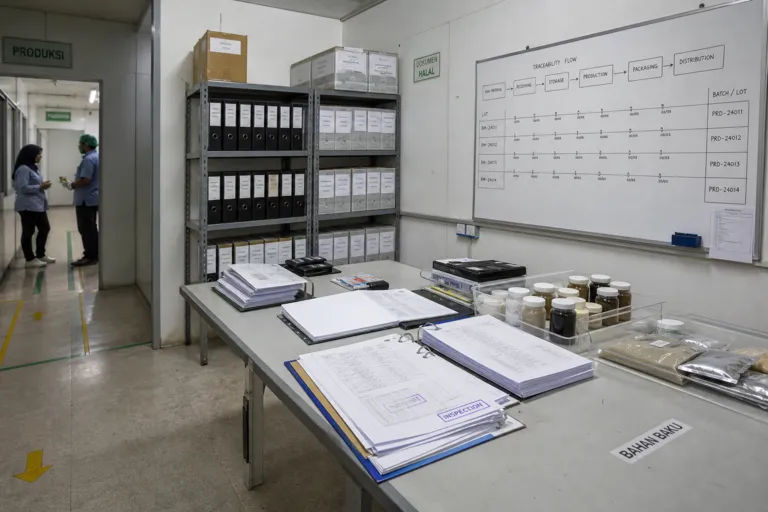
Certification is not only a label decision; it changes how ingredients, factories, and logistics are managed. The 2026 updates describe BPJPH-issued certificates supported by an MUI halal fatwa and technical inspection by accredited Halal Inspection Agencies (LPH). Once approved, a halal label must be displayed on packaging under BPJPH rules. That structure pushes businesses to map inputs and processing steps, then prove them through audits and documentation. A journal analysis emphasizes that a certificate’s value depends on verifying halal status “along its entire chain—from raw materials through processing and logistics to the point of sale,” with traceability and trust described as decisive variables.
For supply chains serving cosmetics and pharmaceuticals, scrutiny is especially intense because consumers cannot assess compliance directly and rely on credible assurance. The same analysis argues these segments are sensitive to any lapse in ingredient sourcing or processing, because one weak link can compromise a whole category. It highlights blockchain as a promising tool for traceability, citing research that distributed ledger approaches can secure provenance and handling in ways paper certificates cannot. Separately, a 2026 forum recap for personal care and homecare ingredients describes Indonesia’s officials signaling that cosmetics and pharmaceuticals will face mandatory rules in October 2026, making full-chain halal compliance a “hard entry threshold” for ingredient makers and brands selling into the market.
The Indonesia Halal Certification Mandate is also being framed as part of national economic positioning, which adds pressure for consistent enforcement and repeatable standards. At Halal Expo Indonesia in Jakarta, BPJPH leadership described 2026 as the “Year of Halal” and said the policy is intended to protect consumers while strengthening product quality, competitiveness, and regulatory certainty. One BPJPH statement cited in consultancy reporting says Indonesia’s halal value chain contributed about 27% of national economic activity during the previous nine months, with an estimated value approaching IDR 5,000 trillion. For exporters and importers, the U.S. FAS report notes trade implications and references a draft concept that would require halal certification of the entire supply chain, while also stating those supply-chain-wide requirements are not finalized and are not in effect.
When does Indonesia begin enforcing mandatory halal certification?
Which product categories must be halal certified by October 17, 2026?
How does the Indonesia Halal Certification Mandate reshape supply chains for food and cosmetics?
Why is traceability so important for halal compliance under Indonesia’s regime?
What economic significance has BPJPH linked to Indonesia’s halal value chain?