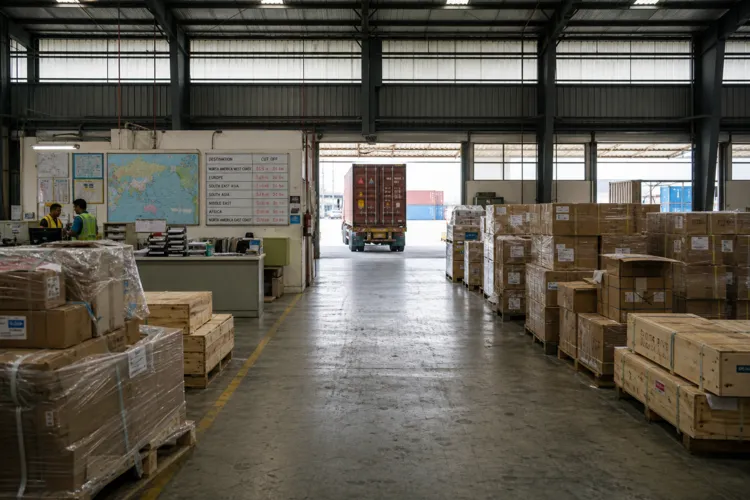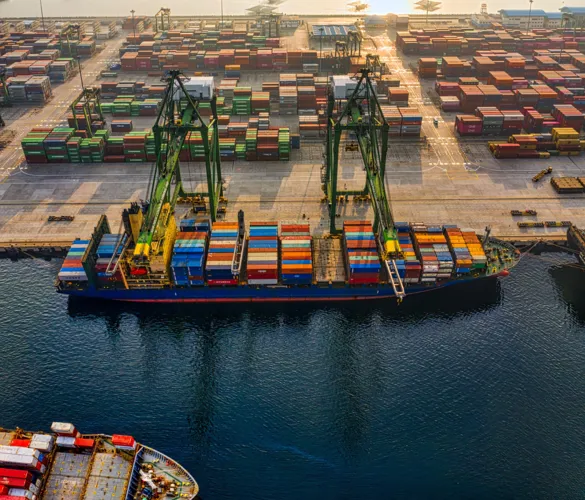
Vietnam is under growing pressure to tighten rules of origin as the US focuses on transshipment controls in its trade talks. In July 2026 discussions, Washington’s demands included stricter origin rules aimed at stopping Chinese goods from being routed through Vietnam to avoid US duties. The issue is not abstract for retailers and importers. US Customs has imposed a 40% transshipment penalty on shipments found to be routed through Vietnam to evade tariffs, and multiple sourcing advisors describe a permanent rise in the compliance bar, not a short-term headline cycle.
Tariff arithmetic adds urgency, but the paperwork test is the real differentiator. As of July 2026, a 10% Section 122 baseline applies to imports from Vietnam on top of ordinary HTS duty, with many finished goods landing in an effective 10% to 25% band, while some apparel lines fall between 18% and 42% all-in because base garment duties are already high. Separately, Section 232 metals tariffs of 50% on steel and 50% on aluminium stack on top for metal-intensive products. These layers make it essential to separate legitimate Vietnamese production from shipments that could be treated as tariff evasion.
What “Made in Vietnam” Must Mean Under US Rules
For US Customs purposes, “Made in Vietnam” is a legal conclusion, not a label. The controlling concept is substantial transformation under 19 C.F.R. § 134.1(b): the product must emerge from processing in Vietnam as a new and different article of commerce with a new name, character, or use. Guidance for importers is blunt that assembly or relabeling of Chinese components does not qualify. The importer of record—often the US buyer—carries the burden of proof. If CBP challenges the claim, the importer must produce documentation or pay the penalty.
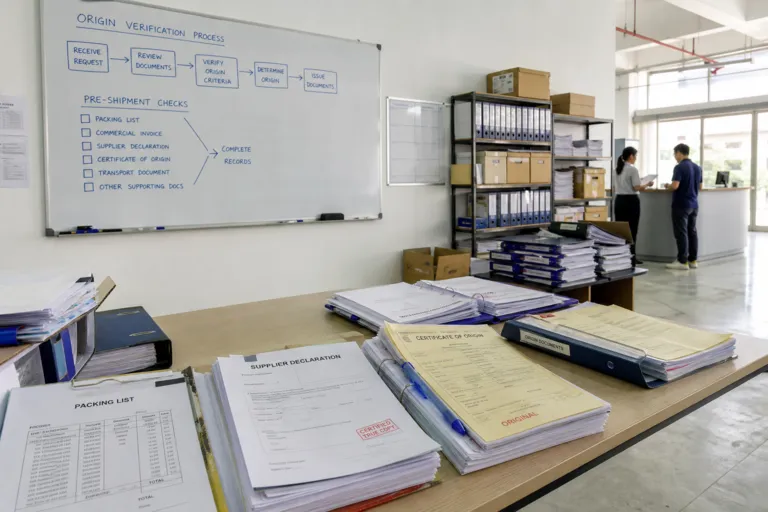
Documentation standards are also described as materially tougher than in prior years. Compliance guidance verified in April 2026 warns that documentation that cleared US Customs in 2023 may not survive a 2026 audit, and it stresses that origin support must be in place before the shipment sails. Another Vietnam-focused trade analysis frames the main buyer mistake as treating tariffs like a fixed spreadsheet line rather than a moving regime with a paperwork test underneath it. In practice, that means building a credible file such as bills of materials, costing records, processing logs, and origin certificates to show genuine Vietnamese manufacturing and avoid the 40% transshipment levy.
The policy timeline is moving, too. Section 122 has a 150-day life that runs out around 24 July 2026, and the US Trade Representative opened a Section 301 investigation into Vietnam’s intellectual-property practices on 29 May 2026, with public comments due 6 July and a hearing on 7 July. Advisors expect a new tariff regime to land before the Section 122 authority lapses. In that environment, Vietnam transshipment tariff compliance 2026 becomes less about guessing rates and more about keeping origin verification, shipping manifests, and declarations audit-ready so sourcing plans remain resilient even as legal authorities and duties shift.
What is the US penalty if goods are deemed transshipped through Vietnam?
What test determines whether a product qualifies as “Made in Vietnam” for US Customs?
What tariff level applied to imports from Vietnam in July 2026 under Section 122?
Why does Vietnam transshipment tariff compliance in 2026 depend so much on documentation?
What key dates were flagged in 2026 for changes to US tariff authority affecting Vietnam?