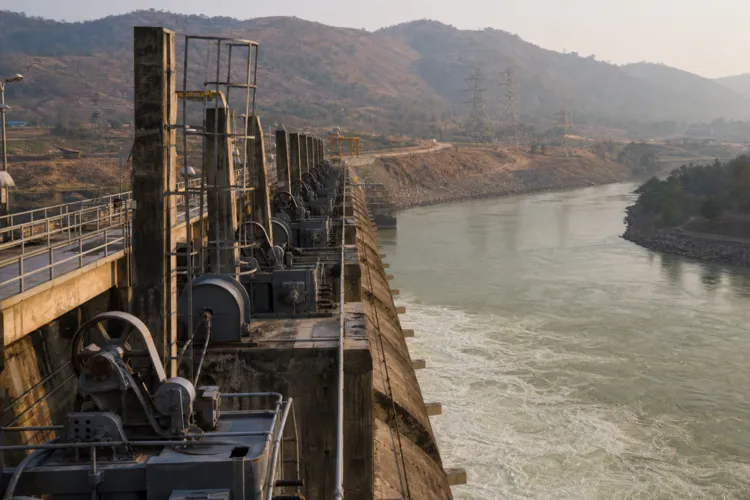

Singapore’s push to become a Singapore carbon services hub is rooted in both strategy and constraint. The city-state covers 736.3 square kilometers, and it is physically constrained in building large-scale renewable generation. One estimate says that even if Singapore fully deploys its technical solar potential by 2050, around 8.6 gigawatt-peak, that would cover only about 10% of projected electricity demand. In response, the government has set targets that include up to 30% of low-carbon electricity imported from the region, while domestic solar is targeted to provide around 6%. This context helps explain why Singapore is leaning into services that do not require land: trading, financing, advisory, and the verification needed to make carbon markets credible.
Policy is a key part of that credibility. A domestic carbon tax was introduced gradually in 2019 at S$5 per tonne of CO2e. It rose to S$25 in 2024–2025, then reached S$45 on January 1, 2026, for the 2026–2027 period, with a final target of S$50–80 per tonne by 2030. Since 2024, companies subject to the tax have been allowed to use high-quality International Carbon Credits (ICCs) to offset up to 5% of taxable emissions, a deliberately small limit intended to keep the focus on domestic emissions cuts. These rules create demand for high-integrity credits, and for the market infrastructure that can support transparent transactions and robust scrutiny.
Trading, Credits, and MRV Are Expanding Together
Market-building is not only about a single exchange. Climate Impact X (CIX) was established in 2021 through a partnership between DBS, SGX, Standard Chartered, and Temasek, and was designed as a Singapore-based global carbon exchange that uses satellites and blockchain to maintain transparency in traded credits. Japan’s Mizuho joined as an investor in 2024. On the services side, Singapore has published guidelines on Voluntary Carbon Markets to guide companies in their use of carbon credits as part of a credible decarbonisation plan, and these measures are creating sustained demand for low-carbon advisory services and monitoring, reporting, and verification (MRV). Singapore has also set quality benchmarks through its ICC framework, including whitelisted methodologies that take reference from reputable international standards.
Verification and integrity work is becoming a differentiator. The Integrity Council for the Voluntary Carbon Market (ICVCM) launched its first overseas office in Singapore to build on work in the region related to the Core Carbon Principles (CCPs) with governments, corporates, financial institutions, and other market actors. A separate initiative highlighted in 2026 is a new $24 million decarbonization hub launched in Singapore, aimed at building digital verification infrastructure to strengthen carbon market integrity across Southeast Asia. Work on methodologies for nature-based solutions and blue economy initiatives is also underway, alongside capacity-building programs for governments and corporate leaders. The National Climate Change Secretariat has also pointed to growing demand across project development, financing, consultancy, trading, and MRV, supported by the finalisation of the Paris Agreement Article 6 rulebook at COP-26.
These shifts are showing up in ecosystem growth and long-range expectations. A study commissioned by EDB and Enterprise Singapore estimates projected gross value added of US$1.8 billion to US$5.6 billion for Singapore by 2050, depending on international climate change developments. The National Climate Change Secretariat says Singapore is home to more than 70 organisations providing carbon services, described as the highest concentration of service providers in Southeast Asia. EDB also reports the sector is now home to more than 150 firms, double the number from 2021, spanning low-carbon advisory, carbon accounting, project development, and carbon credit trading. As the ecosystem expands, demand is expected to grow for skills in climate risk analysis, decarbonisation strategy, carbon trading, and certification and verification, supported by training initiatives such as the Carbon Market Academy of Singapore by NTU and the Sustainability Academy by NUS.
What is driving Singapore’s push to be a regional center for carbon services?
How has Singapore’s carbon tax evolved, and why does it matter for carbon credits?
What institutions and platforms support carbon trading and integrity in Singapore?
How large is the carbon services ecosystem in Singapore today?
What is the outlook for the Singapore carbon services hub in economic terms?