
Indonesia is positioning its maritime sector as a growth engine under a blue economy agenda, with fisheries increasingly framed as both a food-security pillar and an investment destination. One study estimates that Indonesia’s maritime sector contributes approximately 2.5% to GDP, based on provincial data from 2010 to 2023 across 32 provinces, and finds fisheries production volume is among factors that significantly affect provincial economic growth. A separate national snapshot values Indonesia’s ocean economy at approximately IDR 1,290.2 trillion (about USD 80 billion), or 7.6% of GDP in 2021, highlighting the stakes for policy stability and bankable projects. For Indonesia’s blue economy fisheries story to be investable, it must show credible governance, predictable rules, and pathways for coastal livelihoods to benefit.
On output and trade, the numbers underscore why investors keep watching the sector. ASEAN Blue Wealth reports that, in fisheries alone, Indonesia produces a total output of 24.57 million tons across capture fisheries and aquaculture, and exports products with a total value of USD 5.95 billion. Investor commentary also points to near-term production expectations: according to Indonesia’s Ministry of Marine Affairs and Fisheries, fisheries production in the first quarter of 2026 is expected to reach 3.6 million tons. Yet sources also warn that production growth by itself is not a durability plan. Without regulation and enforcement, resource pressure can rise, which becomes a material risk for long-horizon capital and for communities that rely on local waters.
Fisheries Reform Meets Enforcement and Equity Tests
Enforcement is becoming a defining investment signal, especially around illegal, unreported, and unregulated (IUU) fishing. One investor-focused analysis estimates economic losses of over USD 800 million between 2020 and 2025 linked to IUU fishing, alongside sustainability threats. In response, it reports the government granted the fisheries ministry an additional budget of IDR 2 trillion (USD 112 million) to curb IUU within Indonesia’s maritime areas. At the same time, research on policy change in Indonesia’s commercial fishing sector highlights uncertainty, with investors and workers struggling to adapt amid successive regulatory changes. This combination—tougher enforcement ambitions alongside shifting rules—can either de-risk the sector or raise perceived policy risk, depending on how consistently reforms are implemented.
Coastal inclusion is another make-or-break factor for Indonesia’s blue economy narrative. The same investor analysis flags concerns that implementation could sideline coastal communities in favor of elites, even as it describes a Fishing Village program designed to build at least 1,000 villages to support two million fishers by the end of 2026. Funding figures cited include IDR 1.34 trillion (USD 75.18 million) for phase one, with an expansion of IDR 859 billion (USD 48.19 million) in phase two. Other research on a marine and fisheries blue economy assessment framework describes major programs introduced by the fisheries ministry, including implementing a quota-based fisheries system and advancing sustainable aquaculture. Together, these steps show intent, but they also raise practical questions about who gets access to capital, permits, infrastructure, and markets.
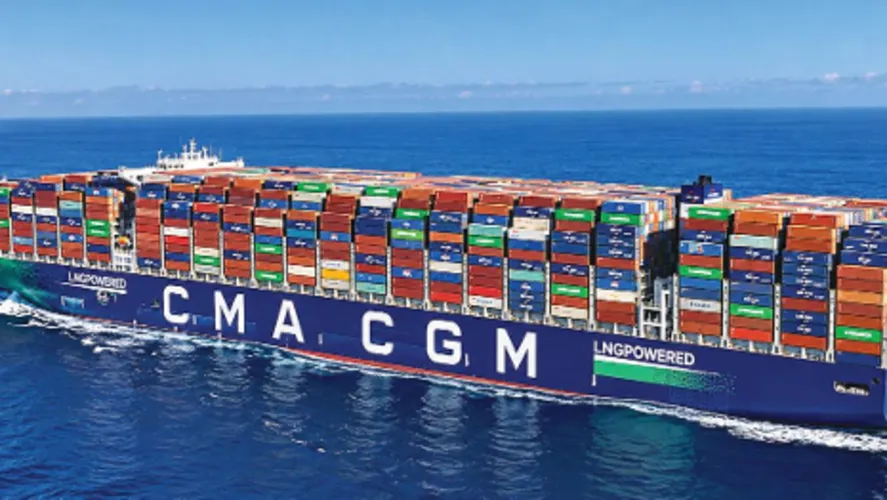
For investment, the core challenge is turning policy ambition into financeable pipelines with measurable outcomes. ASEAN Blue Wealth notes that outcome-based financing models, backed by investors and outcome funders, are being used to scale sustainable fisheries management, increase fish biomass, and de-risk future investment in coastal conservation. It also cautions that access to capital remains uneven across coastal and inland communities, and that overall financing still falls short of what is needed to meet blue economy goals. Meanwhile, logistics constraints such as container shortages, rising freight costs, and worsening sedimentation at major ports are cited as competitiveness risks. In practice, investors will likely look for projects that pair enforcement and traceability with infrastructure and community-level participation, so growth in exports and output is matched by resilience and social legitimacy.
What does Indonesia’s fisheries sector contribute to trade and output?
How big are the reported losses from IUU fishing in Indonesia?
What funding has been cited for Indonesia’s effort to curb IUU fishing?
How is Indonesia supporting coastal communities through fisheries programs?
What is driving interest in Indonesia blue economy fisheries from investors?