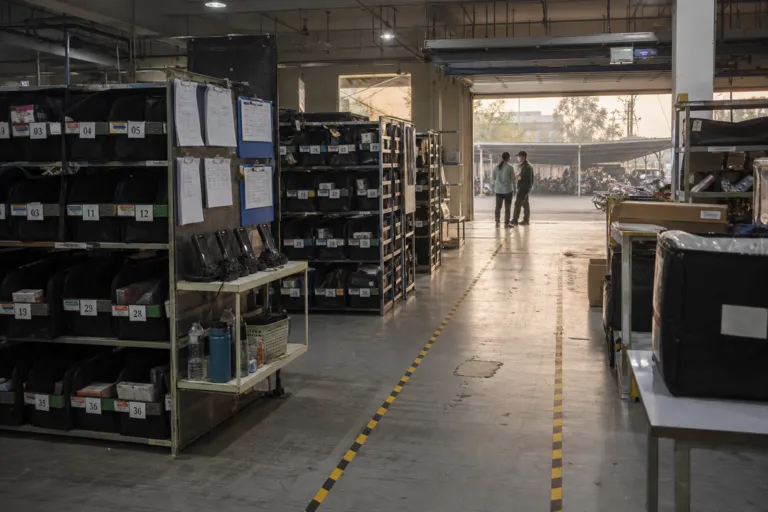
Quick commerce is changing urban retail delivery in Southeast Asia by shifting expectations from “same day” to “within minutes.” Global research defines quick commerce by fulfillment within 10 to 45 minutes, enabled by micro-fulfillment centers or dark stores located within a 2 to 3 km radius of customers. This model is designed for dense cities where short delivery radii and better fleet utilization are possible. A separate global outlook also highlights demand for 10 to 30-minute delivery across groceries, pharmaceuticals, electronics, and personal care, showing how speed targets are becoming a competitive battleground.
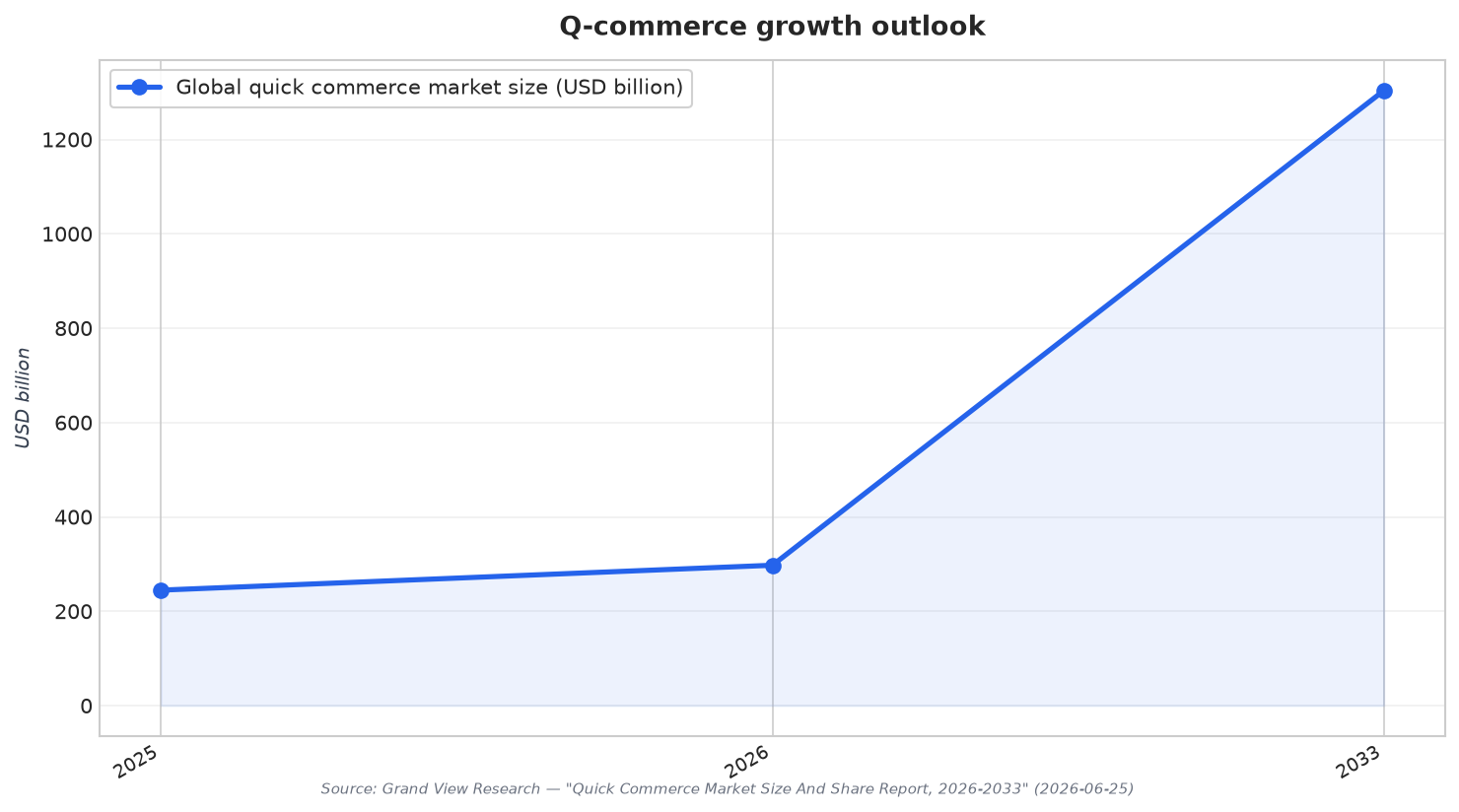
In the broader backdrop, Asia Pacific has been positioned as a major center of gravity for quick commerce. One market report states Asia Pacific held the largest revenue share globally at 45.8% in 2025, linking momentum to rapid urbanization, rising middle-class populations, and growing smartphone and internet penetration. Another report describes the region as holding around 20% of global share, underlining that published estimates can differ by methodology. For Southeast Asia specifically, the same Asia-Pacific databook characterizes the model as less advanced than in India, but gaining traction through ride-hailing and super-app platforms that can bundle demand, riders, and merchant supply.
From Metro Density to Unit Economics: What Actually Determines Speed
On-the-ground country details show why delivery speed is not just a marketing claim, but an operational trade-off. In Singapore, the quick commerce market is valued at USD 387.68 million in 2026 and is projected to reach USD 502.86 million by 2031, at a CAGR of 5.37%. Singapore’s cost and compliance environment also matters. Delivery riders earn SGD 8–12 (USD 5.92–8.88) per hour, and safety rules introduced in November 2025 mandate rest breaks and speed caps that can trim deliveries per shift by up to 15%. The same report notes that ultra-dense dark stores may need 150–200 daily orders to break even, pushing the market toward operators with scale or logistics alliances.
Thailand illustrates another path: rapid network build-out supported by connectivity depth and metro clustering. Thailand’s quick commerce market is valued at USD 0.59 billion in 2025, estimated at USD 0.66 billion in 2026, and projected to reach USD 1.12 billion by 2031, at a CAGR of 11.25%. The same source reports 4G population coverage at 98% and active mobile broadband subscriptions at 122 per 100 inhabitants, which helps app-led ordering and live dispatch. It also points to Bangkok and nearby urban clusters where dense rider coverage and store proximity make shorter delivery windows more dependable, encouraging platforms to compete by “speed stratification,” not just by assortment.
Competition in the Southeast Asia quick commerce market is therefore shaped by who can build urban fulfillment density while managing cost and regulatory headwinds. The Asia-Pacific databook says super-apps are key players and reports that GrabMart has a share of over 35% in quick commerce in some key locales. It also suggests Southeast Asia may prioritize 20 to 30-minute promise ceilings rather than “10 minutes everywhere,” alongside new revenue streams such as advertising and subscriptions. At the same time, global market studies note operators are enhancing hyperlocal fulfillment, integrating AI-powered route optimization, and using demand forecasting and inventory optimization to improve dark-store economics, including reported delivery cost reductions of 18% to 23% between 2022 and 2025 among leading operators cited in one report.
What is quick commerce, and how fast is it supposed to be?
How large is Singapore’s quick commerce market, based on published estimates?
What do Thailand’s figures say about growth in rapid delivery?
What constraints affect unit economics for urban quick commerce in Singapore?
How is the Southeast Asia quick commerce market evolving beyond top city centers?