Medical travel is moving back into growth mode, and ASEAN providers are positioning themselves to capture the rebound. In the ASEAN medical and wellness tourism market, estimates put the sector at USD 66.1 billion in 2024, rising to USD 76.5 billion in 2025 and projected at USD 218.4 billion by 2034, with a CAGR of 12.4% from 2025 to 2034. Thailand led ASEAN with a 47.7% market share in 2024, helped by modern healthcare facilities and efforts to build trust through exceptional service quality and partnerships with global healthcare providers.
Hospitals are the center of this competition because they can offer more complete treatment environments for international patients. One global market report describes an ecosystem that includes 60+ JCI accredited hospitals, noted as one of the highest concentrations in Southeast Asia, plus internationally trained physicians and mature international patient departments across Bangkok, Phuket, and Chiang Mai. That same view ties demand to diversified source markets, including the Middle East, North America, Europe, Australia/New Zealand, Japan, and intra-ASEAN flows, with sizable shares seeking aesthetic, dental, orthopedic, bariatric, fertility, and gender affirmation surgery.
Accreditation and Patient Services Become the New Front Line
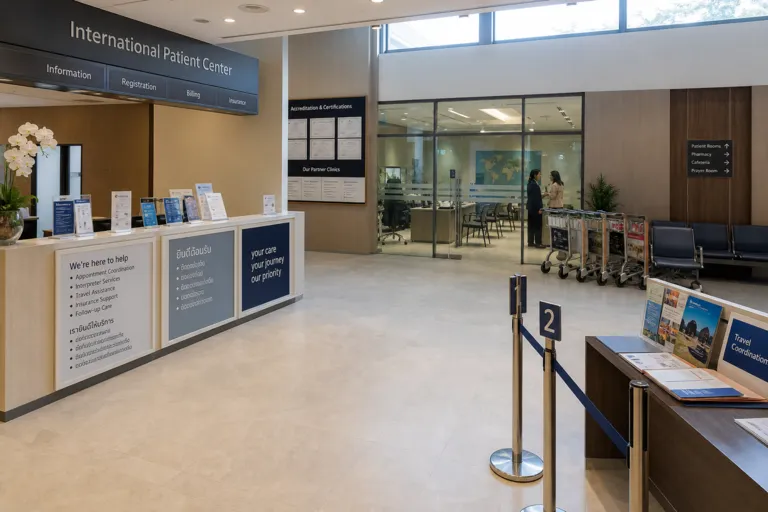
Accreditation is increasingly treated as a signal of safety and consistency, and the trend is expanding. One analysis states that the number of JCI-accredited facilities in the Asia-Pacific and Middle East regions has doubled since 2020. Hospitals that moved early use that credential in global contracting and service design. The same source highlights Bumrungrad International as an example, stating it treats 600,000 patients from 190 countries annually and leverages accreditation to partner with global insurers. Another report adds that leading hospitals often pair specialization, multilingual international patient services, direct billing ties to global insurers, and strong digital engagement to win cross-border patient decisions.
Competition is also shaped by corporate expansion and a broader travel-and-care ecosystem. In ASEAN, major industry players cited include Bumrungrad International Hospital, Raffles Medical Group, and KPJ Healthcare Berhad, alongside hospitality brands such as Hilton Worldwide Holdings Inc., Four Seasons Hotels, Marriott International, and Radisson Hotel Group that support medical and wellness travel through service portfolios and recovery-friendly experiences. Provider expansion is also explicit: in September 2024, IHH Healthcare acquired Island Hospital to improve its presence in Malaysia, a move presented as a way to strengthen regional positioning and market reach.
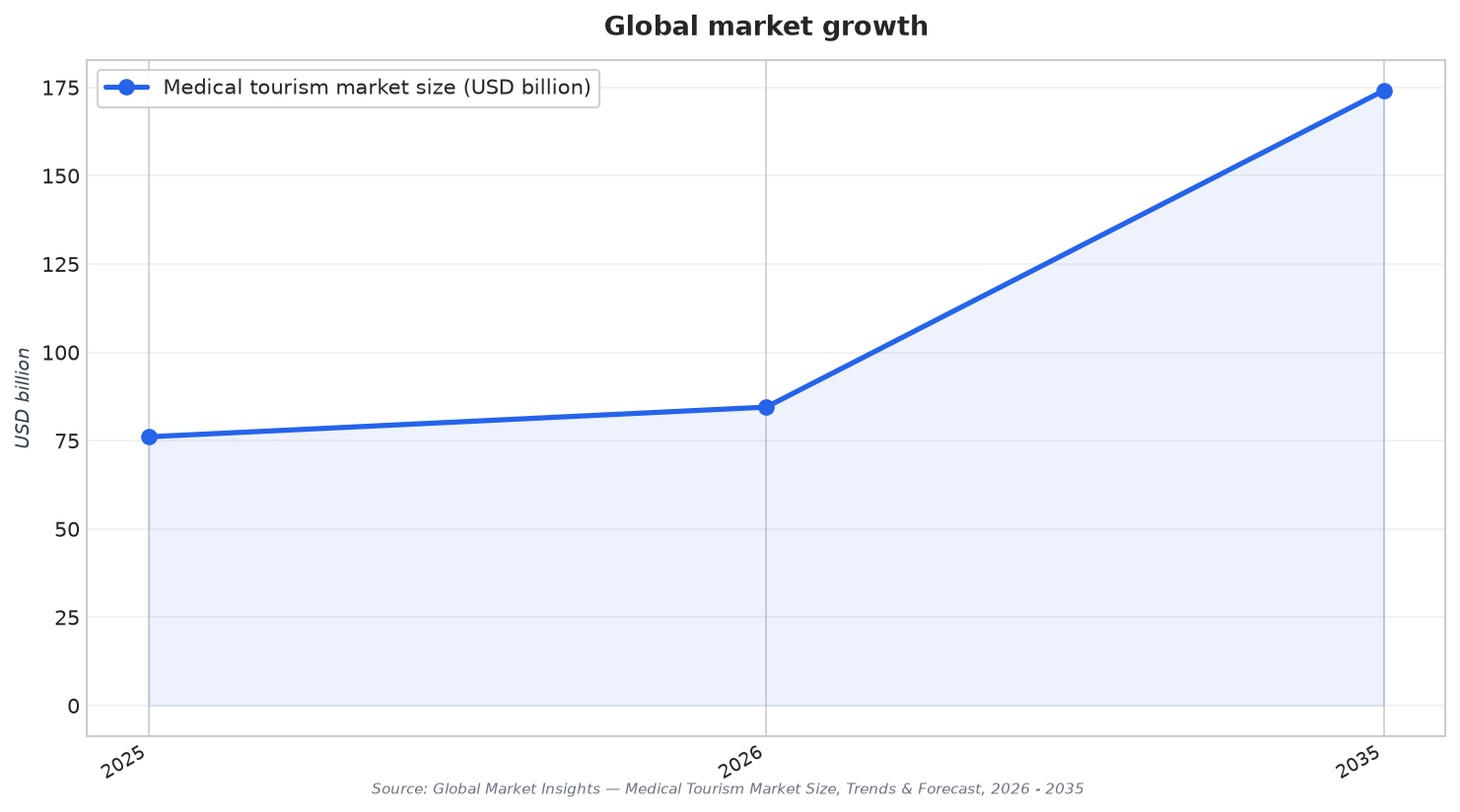
Looking at 2026 planning, market sizing varies by research house, but the direction is consistently upward for cross-border care. One global forecast values the medical tourism market at USD 76.1 billion in 2025 and expects growth from USD 84.5 billion in 2026 to USD 174.1 billion in 2035, with an 8.4% CAGR. Another projects USD 38.6B in 2026 rising to USD 126.2B by 2035 at a 14.1% CAGR, while a separate estimate puts 2026 at USD 66.35 billion and forecasts USD 263.25 billion by 2034 at an 18.8% CAGR. For the ASEAN medical tourism market 2026 conversation, the practical takeaway is execution: accredited capacity, multilingual services, insurer relationships, and integrated travel coordination are repeatedly framed as the levers that convert global demand into booked care.
How fast is the ASEAN medical and wellness tourism market projected to grow?
Which country led ASEAN in market share, according to the sources?
What does the keyword topic—ASEAN medical tourism market 2026—mean for hospital strategy?
What evidence is there that accreditation is expanding in the region?
What recent expansion move was cited in ASEAN healthcare provider activity?