
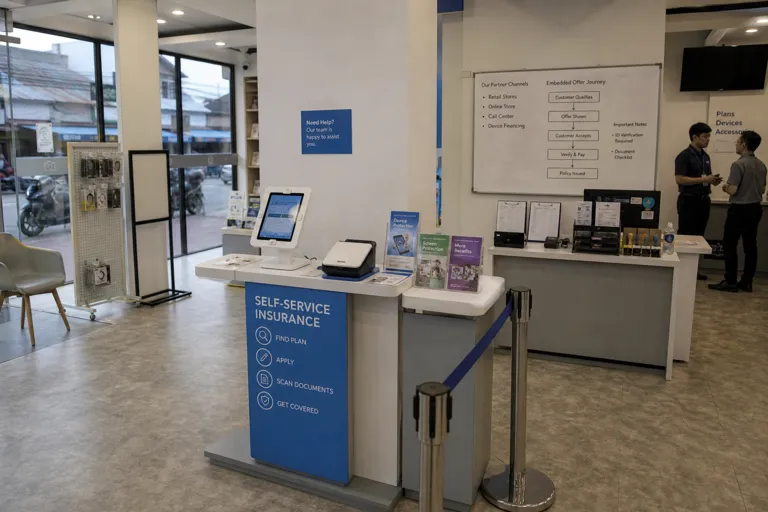
Across ASEAN, the underinsured customer is not a niche. It is a mass-market reality that shapes how insurers design products and how regulators think about resilience. In that context, Southeast Asia insurtech penetration is less about flashy apps and more about distribution efficiency, low-friction onboarding, and faster claims pathways that fit everyday life. Industry commentary on Asia-Pacific points to a regional redesign in how insurance is marketed and delivered as firms look for ways to reach populations that were previously viewed as too costly or too high-risk for traditional models. The ambition is straightforward. Close the protection gap by lowering the barriers that keep people from buying and keeping coverage.
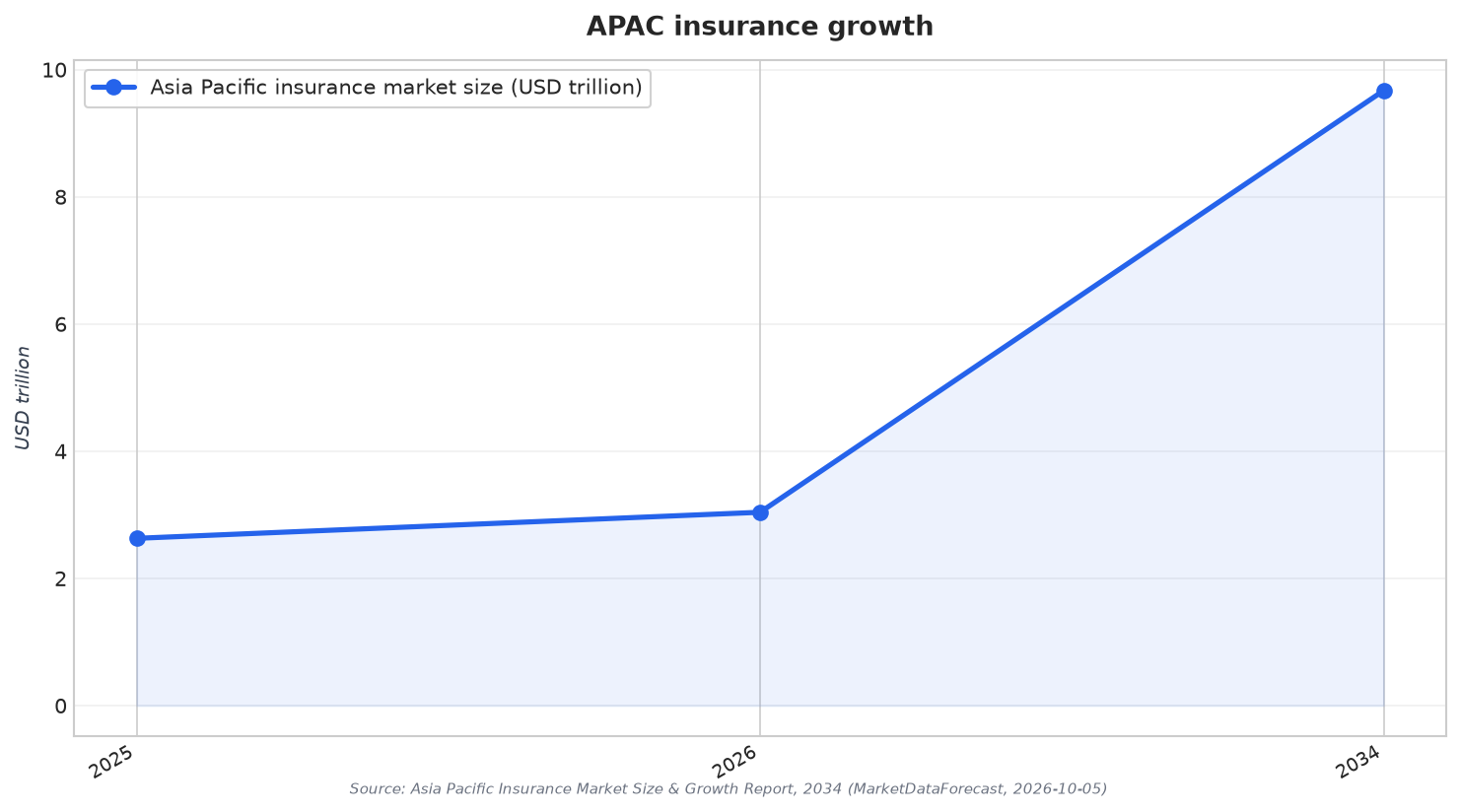
The broader Asia-Pacific market backdrop is large and expanding. A regional market report values the Asia-Pacific insurance market at USD 2.63 trillion in 2025, estimates USD 3.04 trillion in 2026, and projects USD 9.67 trillion by 2034. It also cites a CAGR of 15.56% from 2026 to 2034. The same report frames “aggressive digital transformation” and “widespread adoption of insurtech platforms across emerging economies” as key growth drivers. Those figures describe the whole Asia-Pacific region, not ASEAN alone, but they help explain why Southeast Asian growth strategies increasingly focus on digital rails, new distribution, and simpler products that can be sold and serviced at scale.
Embedded Distribution and API-First Issuance Reshape Access
One specific shift is embedded insurance. Research on the Asia-Pacific insurtech market describes embedded distribution through e-commerce and ride-hailing apps as a force that is “collapsing traditional agent networks across Southeast Asia,” pushing carriers to rebuild underwriting around API-first policy issuance and real-time data ingestion. The same source ties growth to mass-market mobile connectivity in Indonesia and Vietnam, where digital wallets enable “bite-sized premium collection” aimed at previously unreachable informal worker segments. It also highlights telematics-enabled, usage-based motor pricing that can compress risk assessment cycles “from months to seconds.” These are operational changes, but they matter for inclusion because they lower selling costs and make smaller, more affordable policies economically viable.
The Philippines offers a clear, platform-led illustration of how fintech distribution can widen the insurance funnel. A local report notes that GCash offers insurance products through its platform and reaches 39.1 million monthly active users, while also planning a P92.3 billion IPO on the Philippine Stock Exchange. The same source reports life insurance premiums “jumped 17.9%” and benefit payments grew 19.57%, and it links the fintech-and-insurance convergence to reduced friction in buying coverage, especially for younger professionals comfortable with digital transactions. This does not prove national coverage is solved. It does show how a large consumer platform can put insurance in front of millions of users in the routines they already have.
Closing the protection gap is also shaped by investment cycles and regulatory realities. Statista notes that global insurtech deal count moderated in 2025 and remained below the 2021 peak, with quarterly funding subdued since the post-boom correction in late 2022. Yet it argues the structural opportunity remains compelling, including automation in underwriting and efforts to close the protection gap. On the operating side, Asia-Pacific insurtech analysis flags compliance layers such as Singapore’s PDPA data localization requirements and India’s BIS cybersecurity guidelines, and it warns that regulatory divergence across ASEAN member states can complicate cross-border scaling as digital passport frameworks remain unresolved. The practical takeaway is that growth will favor models that can scale efficiently while meeting jurisdiction-specific rules.
What is driving insurers to focus on underinsured ASEAN customers?
How is embedded insurance changing distribution in Southeast Asia?
Which Asia-Pacific insurance market figures frame the opportunity?
What does the Philippines example show about platform-led insurance access?
How should we interpret Southeast Asia insurtech penetration when funding is weaker?